

Views: 0 Author: Site Editor Publish Time: 2026-03-03 Origin: Site


Many shoppers now look beyond the supplement label. They want to know what vegetarian capsules are really made of, not just whether they are plant-based. In this article, you will learn the main capsule materials, how they differ, what they mean in real use, and how to judge which type fits a product best.
Vegetarian capsules are made from non-animal shell materials designed to hold powders, granules, or other supplement ingredients in a convenient oral form. While many shoppers assume there is only one standard plant-based capsule shell, the category actually includes several materials with different production methods and performance traits. In practice, the most common vegetarian capsule material is HPMC, but pullulan and starch-based shells are also used in selected formulations. The shell may also contain small supporting ingredients that help control texture, appearance, and manufacturing stability.
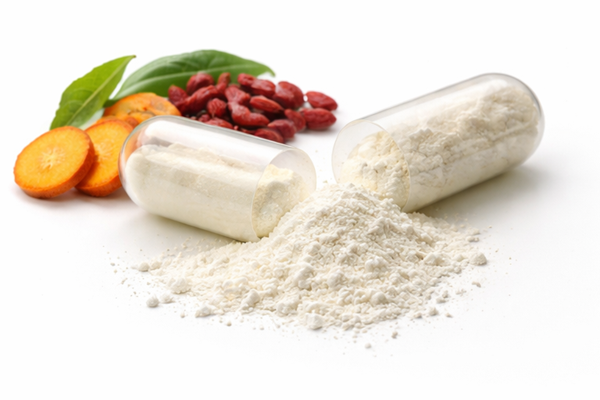
HPMC, short for hydroxypropyl methylcellulose, is the leading base material used in vegetarian capsules. It is derived from cellulose, a structural substance naturally found in plants, and then processed into a capsule-forming material that works well for pharmaceutical and supplement applications. Its popularity comes from a practical balance of availability, shell strength, and compatibility with a wide range of fills. For manufacturers, HPMC offers a dependable plant-based option that can be produced consistently at scale. For consumers, it is often the material behind labels such as “vegetarian capsules,” “veggie caps,” or “plant-based capsules.”
Another reason HPMC appears so often is that it performs well as a neutral shell material. It does not rely on animal collagen, which makes it suitable for products aimed at vegetarian, vegan, halal, or kosher markets when the full formulation supports those claims. Because of that broad applicability, HPMC has become the default shell material in many modern vegetarian capsule products.
Although HPMC dominates the market, it is not the only material used in vegetarian capsules. Pullulan is another recognized option. It is a polysaccharide produced through fermentation, usually from starch-derived feedstocks, and is valued in some applications for its clean appearance and functional film-forming properties. Its use shows that vegetarian capsules do not all come from the same raw-material pathway.
Starch-based capsules add another layer of variety. Some are made from tapioca-derived starch, which comes from cassava. These alternatives are often positioned as plant-based shell options for brands that want a different formulation story from cellulose-based capsules. Together, pullulan and starch-based shells make it clear that “vegetarian capsules” describes a category of non-animal capsule shells, not one single ingredient.
Capsule shell material |
Main source |
Why it is used |
HPMC |
Cellulose-derived plant material |
Widely available, reliable shell performance, common in plant-based capsules |
Pullulan |
Fermentation-derived polysaccharide |
Used for film-forming properties and as a non-animal alternative |
Starch-based shell |
Plant starch such as tapioca |
Offers another vegetarian option with a different raw-material base |
The main shell material is only part of the formulation. Vegetarian capsules may also include secondary ingredients that help the shell form correctly and remain usable during storage and handling. These ingredients are not the primary substance of the capsule, but they can still affect the final product.
Common supporting ingredients include:
● purified water to help shape the shell during production
● gelling agents to assist shell setting and structure
● plasticizers to improve flexibility and reduce brittleness
● colorants to create a desired visual appearance
● opacifiers to reduce transparency and help protect light-sensitive contents
These added components help explain why two products can both use vegetarian capsules yet still differ in appearance, texture, or shelf performance.
Vegetarian capsule materials differ first at the raw-material level. HPMC is cellulose-based, which means it starts from plant cellulose and is then processed into a capsule-grade polymer. Pullulan follows a different route: it is produced through fermentation, not by directly shaping plant fiber into a shell material. Starch-based capsules take yet another path, using plant starch sources such as tapioca as the starting point. For readers, this distinction matters because the label “vegetarian” only tells you the capsule avoids animal-derived gelatin; it does not tell you whether the shell came from cellulose, fermentation, or starch processing.
This difference in origin also affects how each material is positioned in the market. Cellulose-based shells are often treated as the mainstream plant-based option because they are widely used and familiar in supplement manufacturing. Fermentation-derived pullulan tends to be presented as a more specialized alternative, while starch-based shells are often associated with brands that want a different plant-source profile. In other words, vegetarian suitability is the shared outcome, but the manufacturing logic behind each shell can be quite different.
A useful way to think about these materials is by asking what the shell is “built from” before it becomes a capsule. HPMC is built from cellulose chemistry, pullulan from microbial fermentation, and starch-based shells from processed carbohydrate material. That means two products can both be sold as vegetarian capsules while relying on very different technical inputs and processing systems.
Those material origins lead to meaningful differences in shell behavior. Some materials hold up better under low-moisture conditions, while others may need more formulation support to achieve the right shell structure. Oxygen barrier performance can also vary, which matters when a product contains more sensitive ingredients. Shell strength, flexibility, and production handling are not identical either, so manufacturers choose materials based not only on dietary positioning but also on how the shell performs during filling, sealing, storage, and transport.
Material type |
Production route |
Key shell-level difference |
HPMC |
Cellulose-derived processing |
Often valued for stable performance under varied moisture conditions |
Pullulan |
Fermentation-based production |
Often noted for distinct film-forming characteristics |
Starch-based shells |
Starch extraction and modification |
May offer a different structure and processing profile than cellulose-based shells |
The material used to make a vegetarian capsule has a direct effect on how that capsule performs once it leaves the production line. For supplement brands, this affects manufacturing consistency, shipping stability, and shelf presentation. For consumers, it affects whether the capsule keeps its shape, protects its contents, and aligns with dietary or labeling expectations. In other words, capsule material is not just a technical detail hidden in the ingredient panel; it influences how the product behaves in storage, how well it fits the formula inside, and whether the final product matches what the buyer expects from a plant-based supplement.
One of the most practical differences among capsule materials is how they respond to environmental stress. Heat, humidity, and moisture changes can all affect shell integrity. Some vegetarian capsule materials are less dependent on higher moisture levels to remain intact, which can help reduce brittleness in dry conditions. Others may be more vulnerable to deformation if storage conditions fluctuate too far outside their preferred range. That makes shell composition especially relevant for products shipped across regions with different climates or stored for long periods before use.
Stability also matters because the capsule shell protects the fill from outside exposure. If the shell becomes too dry, it may crack. If it absorbs too much moisture, it may soften, warp, or lose its handling quality. These physical changes do not only affect appearance; they can also interfere with filling performance, packaging efficiency, and the overall impression of product quality. A capsule that arrives misshapen or fragile may still contain the same ingredients, but it no longer delivers the same standard of consistency expected in a finished supplement.
Capsule shells also need to work with the material placed inside them. This is where shell–fill compatibility becomes a real formulation issue rather than a marketing point. Dry powders are commonly used in capsules because they are generally easier to pair with standard hard-shell formats. More sensitive fills, however, may interact with the shell differently depending on moisture level, solvent behavior, or reactive compounds present in the formulation.
Some vegetarian capsule materials are chosen because they offer better compatibility with ingredients that might create problems in other shells. Lower moisture transfer can be helpful when the formula contains ingredients that are sensitive to water. In other cases, the shell may need to resist interaction with fill components that could weaken the capsule wall or affect dissolution behavior over time. This is why two supplements with similar active ingredients may still use different capsule materials: the choice is often driven by the stability of the entire system, not just by whether the shell is plant-based.
Real-use concern |
Why capsule material matters |
Storage stability |
Shell composition affects resistance to dryness, humidity, softening, and cracking |
Transport performance |
More stable shells are less likely to deform during shipping and handling |
Fill compatibility |
Different shells respond differently to powders, moisture-sensitive ingredients, and reactive formulations |
Consumer fit |
Material choice can support dietary, religious, and label-related expectations |
From the user’s perspective, capsule composition often matters long before any technical performance issue appears. Many buyers specifically look for vegetarian capsules because they want to avoid animal-derived gelatin. Others care because of vegan or vegetarian preferences, halal or kosher considerations, or a desire for clearer ingredient sourcing. In these cases, the shell material is part of the product decision, not a minor background detail.
Capsule composition also matters to readers who pay close attention to labels. A product may be sold as vegetarian, yet still include secondary shell ingredients such as colorants, gelling aids, or plasticizers that some buyers prefer to review before purchase. That makes transparency important. People are not only asking whether a capsule is free from animal ingredients; they are also asking what the shell contains, how simple the formula is, and whether it fits their personal standards for supplement quality.
Choosing vegetarian capsules starts with looking past the broad marketing language on the front of the label. “Vegetarian” tells you the shell is intended to avoid animal-derived gelatin, but it does not tell you which material was used or how that shell is likely to behave in a finished product. A cellulose-derived shell such as HPMC is not the same as a pullulan shell made through fermentation, and neither is identical to a starch-based capsule. These materials may all fit under the vegetarian umbrella, yet they differ in sourcing, formulation approach, and practical performance. For that reason, the smarter evaluation method is to identify the exact shell material first and treat “vegetarian” as a starting point rather than a final answer.
When comparing products, readers should check the supplement facts panel, ingredient list, or technical description to see whether the capsule shell is made from HPMC, pullulan, or a starch-derived alternative. This matters because those materials are not interchangeable in the strictest formulation sense. One may be selected for broader manufacturing use, another for a specific film property, and another for a different plant-source positioning. Buyers who stop at the word “vegetarian” may miss differences that affect stability, appearance, or brand transparency.
The shell material is only part of the story. Vegetarian capsules may also include supporting ingredients that help the shell keep its structure or appearance. These can include gelling agents, plasticizers, colorants, or opacifiers. For readers who prefer cleaner or simpler formulations, this is often the most important checkpoint after identifying the base shell material. A capsule may be vegetarian and still contain added components that a buyer wants to limit or at least understand before purchase.
A practical label review should focus on three things:
● the primary shell material
● any secondary functional additives
● whether the final capsule profile matches the buyer’s dietary or formulation expectations
A gelatin comparison is useful only when it helps answer a practical choice question. The real issue is not whether vegetarian capsules are always “better” in the abstract, but whether a specific shell material is a better fit for the product, storage conditions, and consumer requirements. In some cases, that comparison matters for dietary reasons. In others, it matters because of moisture behavior, fill compatibility, or label preference. Keeping the comparison narrow prevents the evaluation process from drifting away from the actual buying decision.
Evaluation point |
What to check |
Shell identity |
HPMC, pullulan, or starch-based material |
Additive profile |
Presence of gelling agents, plasticizers, colorants, or opacifiers |
Formula fit |
Whether the shell suits the supplement fill and storage needs |
Buyer fit |
Whether the capsule aligns with vegan, vegetarian, religious, or label-cleanliness expectations |
Before choosing a capsule product, it helps to ask a short set of direct questions. What is the shell actually made from? Are extra functional ingredients included? Is that shell suitable for the product inside? Does the finished capsule align with dietary preferences and labeling expectations? These questions keep attention on material facts instead of marketing shortcuts.
Vegetarian capsules are usually made from HPMC, but some use pullulan or starch-based materials with added ingredients for shell performance. Since capsule materials are not all the same, buyers should look beyond the label and check fit, additives, and stability. Jiahong Health Technology Group Co., Ltd. delivers value by offering capsule solutions that better match product needs and customer expectations.
A: Vegetarian capsules are usually made from HPMC, pullulan, or starch-based shell materials, plus minor processing aids.
A: No. Vegetarian capsules can use cellulose-derived, fermentation-derived, or starch-based materials, depending on formulation goals.
A: Buyers should check whether vegetarian capsules match the fill type, storage conditions, additive limits, and labeling requirements.


