

Views: 0 Author: Site Editor Publish Time: 2026-07-20 Origin: Site


The market for standard adaptogen products is heavily saturated today. Establishing a competitive edge requires you to move far beyond generic, off-the-shelf formulations. We are seeing a massive commercial shift toward highly customized supplementation across the global wellness industry. Savvy brand owners now demand total control over ingredient sourcing, therapeutic dosages, and specific delivery mechanisms. This strategic shift ensures new products meet exact consumer needs rather than blending into a sea of identical competitors. You need a clear path to navigate these production complexities successfully.
This comprehensive guide will walk you through the exact technical, operational, and financial frameworks you need. You will learn how to confidently specify, source, and manufacture a distinct maca capsule product. By following these proven steps, you can launch a superior supplement designed for long-term market dominance.
Choosing between a white-label formula and a custom private label maca capsule impacts your upfront R&D costs, minimum order quantities (MOQs), and speed to market.
Formulation success relies on precise specifications: selecting the right maca root phenotype (yellow, red, black), extract concentration ratios, and processing methods (raw vs. gelatinized).
Evaluating an OEM capsule manufacturer requires looking past the per-unit cost to assess GMP compliance, third-party testing protocols, and supply chain scalability.
A transparent, staged rollout—from raw material verification to pilot runs—mitigates expensive commercial production risks.
Brands often struggle to balance product differentiation against strict budget limits. You want something truly unique for your audience. Yet, custom R&D takes time and upfront capital. Framing this business problem correctly helps you avoid costly missteps early on. Many founders jump straight into custom manufacturing before building a solid customer base. Others rely too heavily on generic formulas and wonder why they cannot command premium pricing.
Standard private label, often called white labeling, relies on a pre-existing formula. The facility already produces this blend at scale.
Pros: It offers a faster time to market. You face much lower minimum order quantities (MOQs). The shelf stability is already proven through past production runs.
Cons: You have a limited ability to claim a unique selling proposition (USP). Your base formula mirrors your competitors perfectly.
Custom formulation takes a different, highly tailored path.
Pros: You gain complete control over the maca supplement profile. You can add synergistic ingredients like ashwagandha or targeted B-vitamins for specific health claims.
Cons: It requires higher initial R&D investment. You must conduct extensive pilot testing. Manufacturers will naturally demand larger minimum order commitments.
How do you choose? It depends entirely on your current brand maturity, existing audience size, and available capital. A new brand might leverage standard white label to test the market quickly. Conversely, an established brand should pursue custom formulas to protect market share and build strong customer loyalty.
Business Profile |
Recommended Approach |
Typical MOQ Expectation |
Time to Market |
|---|---|---|---|
New brand, tight budget, untested audience |
Standard Private Label |
500 - 1,000 bottles |
3 - 6 weeks |
Growing brand, seeking moderate differentiation |
Semi-Custom (Tweaked base formula) |
2,500 - 5,000 bottles |
6 - 8 weeks |
Established brand, high capital, existing audience |
Full Custom Formulation |
10,000+ bottles |
10 - 16 weeks |
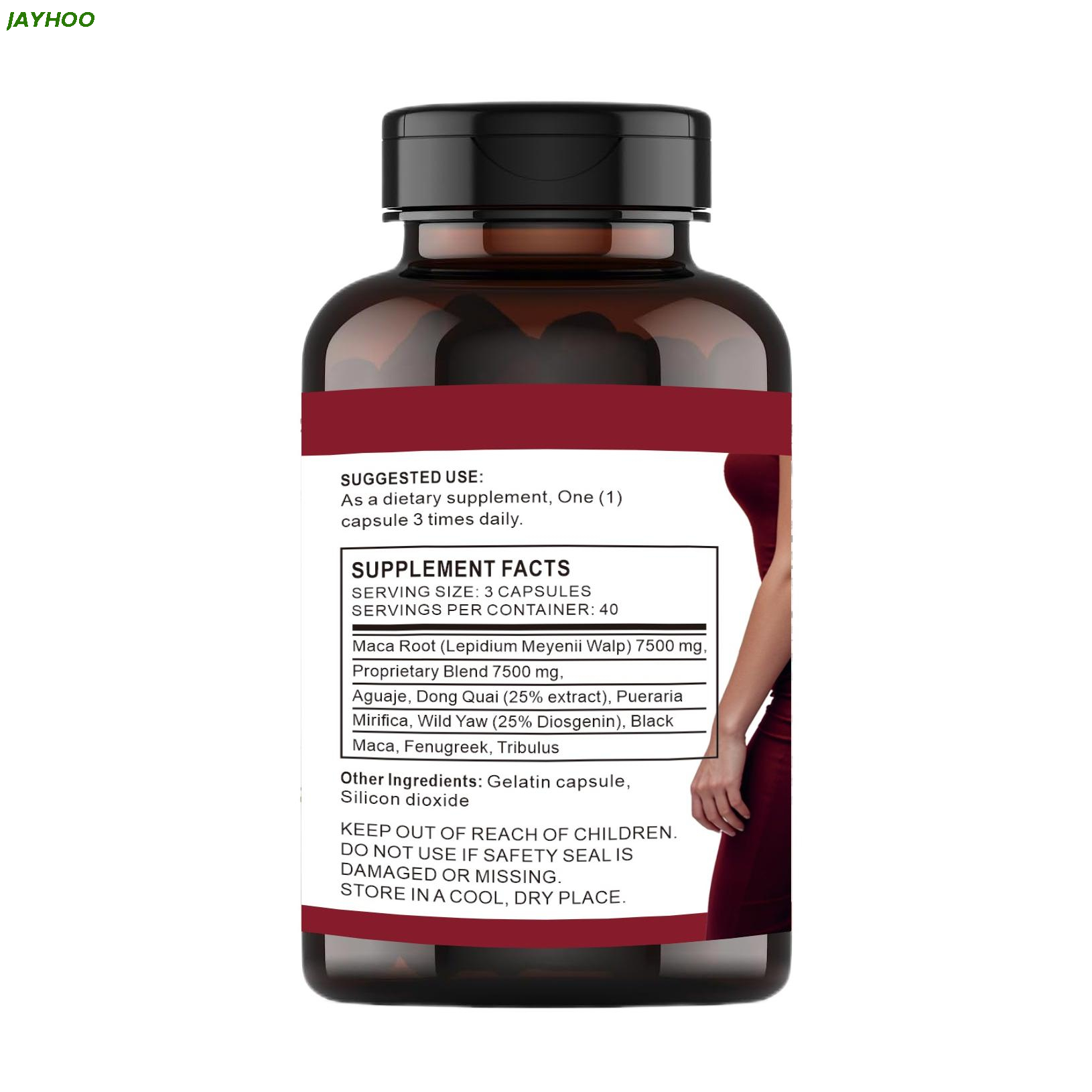
Understanding botanical science is crucial for product development. Maca root grows in different phenotypes in the high Andes. Each color serves a distinct end-use case. Yellow maca is excellent for general energy and daily vitality. Red maca focuses heavily on hormonal balance and bone health. Black maca is typically reserved for endurance, muscle recovery, and mental focus. You must align the phenotype choice closely to your target demographic.
Extract ratios matter significantly for product efficacy. Standard raw root powder is quite bulky. A highly concentrated herbal extract capsule uses a 10:1 or 20:1 ratio. This means ten grams of raw root condense down into one gram of extract powder. It allows you to achieve clinical dosing in fewer pills. Consumers heavily prefer taking two pills daily instead of swallowing six large capsules.
Digestion is another critical, often overlooked factor. Gelatinized maca undergoes a specialized extrusion process. It removes the heavy starch content naturally found in the raw root. This creates better bioavailability and drastically reduces gastrointestinal discomfort. It is a vital consideration for ensuring recurring customer purchases. If a supplement causes stomach cramps, consumers will never buy it again.
Finally, capsule shell selection impacts your unit economics and brand perception. Bovine gelatin is highly cost-effective and functionally stable. However, vegan HPMC (hydroxypropyl methylcellulose) shells appeal to a broader, plant-based demographic. Weigh these costs carefully for your premium nutrition capsule line. Plant-based shells typically cost slightly more but open up larger retail opportunities.
Facility certifications are strictly non-negotiable in this industry. Current Good Manufacturing Practices (cGMP) ensure strict quality control during every production phase. FDA registration provides necessary regulatory oversight. ISO certifications demonstrate standardized operational procedures. These baseline standards directly impact your brand liability and long-term reputation. Do not partner with uncertified facilities under any circumstances.
Ingredient traceability prevents dangerous contamination issues. You must demand a Certificate of Analysis (COA) for all raw materials. A proper COA verifies botanical identity and active potency. It also proves the absolute absence of heavy metals and microbial pathogens. Maca is a root vegetable. It absorbs minerals directly from the soil. Therefore, strict heavy metal testing according to USP standards is mandatory.
Evaluating scalability requires clear, proactive communication. Negotiate pilot runs carefully before committing to commercial scale. Look closely for hidden costs buried in tiered pricing structures. Some facilities hide packaging surcharges or machine setup fees deep in the fine print.
Request a virtual facility tour: Observe their raw material quarantine areas and blending rooms directly.
Review historical lead times: Ask for data on their average turnaround times during peak industry seasons.
Assess supply chain resilience: Inquire about their backup suppliers for critical raw materials.
Audit testing protocols: Confirm they use independent, third-party ISO-accredited labs for final product testing.
Formulation complexities drive up your unit costs quickly. Adding multiple active ingredients increases blending time significantly. It introduces potential homogeneity issues during the mixing phase. Each additional ingredient requires separate testing and individual validation. Keep the formula elegant and focused. A bloated ingredient list rarely improves clinical efficacy.
Packaging formats heavily influence both production speed and logistics. Standard PET or HDPE bottles run quickly on automated filling lines. They are lightweight and resist shattering during transit. Glass bottles convey premium positioning but increase shipping weight drastically. Blister packs protect individual pills from moisture but add significant packaging time and cost.
Label compliance protects you from costly product recalls. Ensure the facility provides robust structural support for FDA-compliant Supplement Facts panels. They must verify allergen warnings accurately. Rely on their internal regulatory experts to craft structure and function claims carefully. Avoid crossing into regulatory gray areas regarding disease treatment claims. The FDA strictly monitors non-compliant marketing language.
Many brands select oversized bottles for small pill counts. This creates a deceptive package appearance and wastes valuable freight space. Always match the bottle neck size to the pill dimensions perfectly. This ensures smooth, rapid flow through the automated counting machines. It reduces machine jamming and prevents unexpected labor surcharges.
A transparent, staged rollout mitigates expensive commercial production risks. Moving blindly from concept to mass production often results in disastrous inventory issues. Follow these precise steps for a smooth, predictable launch.
Step 1: The Brief. Submit a detailed Product Requirements Document (PRD) to prospective manufacturers. Define your exact ingredient ratios, target demographics, and specific packaging preferences clearly.
Step 2: Prototyping and Sampling. Request small lab samples. Evaluate the capsule fill weight, powder appearance, and physical stability. Check for any unpleasant odors or unnatural discoloration.
Step 3: Pilot Production. Run a minimum viable batch on actual machinery. Test packaging alignment, label application straightness, and induction seal integrity.
Step 4: Full Production & QA. Execute the final release process. Demand post-production third-party testing before authorizing the bulk shipment to your regional warehouse.
During the pilot production phase, conduct accelerated stability testing. This exposes the product to high heat and humidity. It helps determine the accurate shelf life of the formula. Do not skip this step. It guarantees product potency holds true until the marked expiration date.
A successful customized maca product bridges the critical gap between raw ingredient science and reliable manufacturing execution. It requires strict attention to detail at every single phase. By prioritizing high-quality botanical extracts and vetted manufacturing partners, you protect your brand reputation.
Select two or three manufacturers based on their MOQ alignment. Demand total transparency regarding their raw material sourcing networks. Draft your initial product specification sheet completely before requesting formal quotes. This proactive approach ensures accurate, apples-to-apples pricing comparisons. Take control of your supply chain today and build a product designed for lasting market success.
A: Standard private label runs might start at 500 to 1,000 bottles. However, fully custom formulations typically require 100,000 or more capsules per run. This depends heavily on the specific facility and their blending equipment capacity.
A: The timeline varies based on formulation complexity. Expect 2 to 4 weeks for initial R&D and sampling. Following approval, full production takes 8 to 12 weeks, assuming all raw materials are readily available in the supply chain.
A: Gelatinized maca is generally preferred for premium capsule supplements. It offers a higher nutrient concentration, better overall solubility, and significantly easier digestion by removing complex starches.
A: Yes, you can combine complementary ingredients. However, you must carefully assess total fill volume due to strict capsule size limitations. You also need to evaluate potential ingredient interactions affecting long-term shelf life.


