

Views: 0 Author: Site Editor Publish Time: 2026-05-06 Origin: Site


The health landscape is shifting. Why settle for generic pills when consumers demand personalized solutions? Today, mastering custom supplement formulation is the best way to build a competitive brand.
In this guide, you will learn how to turn a creative concept into a compliant, shelf-ready product.
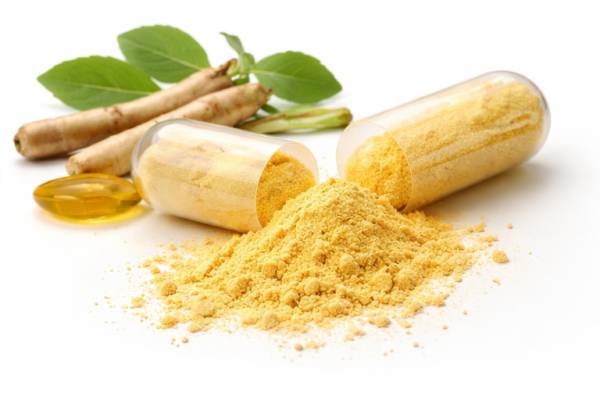
● Holistic Lifecycle Management: Success requires a strategic transition from the initial creative concept to a compliant, shelf-ready finished product.
● Scientific Synergy: Effective custom supplement formulation relies on pairing ingredients that enhance bioavailability and physiological impact.
● Manufacturing Feasibility: You must balance your vision with practical constraints like dosage form stability and organoleptic (taste) testing.
● Regulatory Rigor: Ensuring compliance with FDA, FTC, and international standards is non-negotiable for long-term brand safety.
The lifecycle of a new product begins long before the mixing machines start turning. The first phase is purely strategic. You must identify a market gap—a specific problem that existing products fail to solve. Are you targeting cognitive health for high-performing professionals or metabolic support for aging populations? Once the "Why" is established, the "How" becomes a matter of chemistry and logistics.
A successful custom supplement formulation relies heavily on ingredient synergies. It is not enough to include popular compounds; they must work together. For instance, pairing Vitamin D3 with Vitamin K2 ensures that calcium is directed to the bones rather than depositing in the arteries. We also look at bioavailability. If the body cannot absorb the nutrient, the formula fails. This might mean choosing a liposomal delivery system or adding black pepper extract (piperine) to enhance the uptake of curcumin.
Choosing the right dosage form is equally critical. While capsules are traditional, powders allow for higher dosages of bulky ingredients like collagen or amino acids. Stability plays a role here; some botanical extracts degrade quickly in liquid form but remain potent in a bilayer tablet. Throughout this process, flavor profiling and organoleptic testing (taste, smell, and mouthfeel) are essential, especially for powders and gummies. A technically perfect custom supplement formulation will fail commercially if it tastes like medicine.
Development Stage | Key Focus | Primary Goal |
Market Analysis | Gap identification | Defining the Unique Selling Proposition (USP) |
Formulation Science | Synergies & Bioavailability | Maximizing physiological impact |
Dosage Engineering | Stability & Compliance | Determining physical delivery (Capsule, Powder, etc.) |
Prototyping | Flavor & Texture | Ensuring consumer compliance and enjoyment |
The soul of any custom supplement formulation is its ingredient deck. Modern brands must choose between standardized extracts and whole-plant powders. Standardized extracts offer a guaranteed percentage of an active marker (like 25% anthocyanins in bilberry), providing consistency that whole plants cannot match. However, some "clean label" brands prefer whole-plant powders to maintain the natural matrix of the botanical.
To build instant authority, we often recommend incorporating trademarked ingredients. These are specific versions of compounds that have undergone independent clinical trials. Using a branded ingredient allows you to borrow its scientific credibility, making your marketing claims much stronger. Furthermore, the modern consumer demands sustainability. Sourcing non-GMO, organic, and vegan-certified inputs isn't just about ethics; it's a strategic move to future-proof your brand against shifting regulatory and consumer standards.
One of the biggest risks in custom supplement formulation is degradation. Vitamins and probiotics are sensitive to environmental stressors. To combat this, formulators use "overages"—adding a calculated extra percentage of an ingredient to ensure that even after 24 months on the shelf, the product still meets its label claims. This requires sophisticated shelf-life prediction and stress testing.
Interaction awareness is another pillar of stability. Certain minerals can act as catalysts, accelerating the oxidation of vitamins. We must also consider packaging science. A high-end custom supplement formulation can be ruined by cheap packaging. Glass provides the best barrier against oxygen, while HDPE and PET plastics offer different levels of moisture protection and UV shielding. The goal is to create a micro-environment that preserves the formula's potency from the moment it leaves the factory until the consumer finishes the bottle.
Navigating the legal landscape is perhaps the most daunting part of the process. In the United States, the FDA and FTC govern what you can say about your custom supplement formulation. Following DSHEA (Dietary Supplement Health and Education Act) requirements is non-negotiable. You must ensure that your "Structure/Function" claims do not cross the line into "Disease" claims, which would classify your supplement as an unapproved drug.
If you plan to export, the complexity multiplies. The EU, Canada, and Australia have vastly different lists of approved ingredients and allowable dosage levels. Before a single pill is pressed, we verify the Certificate of Analysis (COA) for every raw material. This document proves the ingredient is pure, potent, and free from contaminants like heavy metals or pesticides.
Scaling a custom supplement formulation from a 1kg lab sample to a 500kg production run is not a simple multiplication exercise. It requires a manufacturing partner with rigorous GMP (Good Manufacturing Practices) certification. GMP ensures that the facility follows strict protocols to prevent errors and contamination.
During production, blending and homogeneity are the primary concerns. If the mixing time is too short, one capsule might have double the active ingredient while another has none. In-process quality control checkpoints test for weight variation and disintegration time (how fast the pill dissolves in the stomach). Furthermore, if your facility handles common allergens like soy or dairy, we must implement strict wash-down procedures to avoid cross-contamination in your custom supplement formulation.
As we approach the finish line, the focus shifts to the "Finished Product" experience. Label transparency is key. Modern consumers want to know exactly what they are putting into their bodies, including the "other ingredients" like fillers and flow agents. We recommend using clean-label alternatives like rice hulls instead of synthetic magnesium stearate where possible.
Before shipping, the final batch must undergo third-party verification. This independent testing confirms that the finished custom supplement formulation matches the label and is safe for consumption. Once cleared, logistics and storage become the final hurdle. Maintaining climate control during shipping is vital, especially for softgels or heat-sensitive powders, to ensure the product arrives in the same condition it left the lab.
Successful custom supplement formulation balances creative vision with technical precision. By prioritizing quality and science, jiahonghealth helps brands turn ideas into premium finished products. Their expert services ensure every formula meets strict compliance and efficacy standards. Partnering with a leader like jiahonghealth gives you a competitive edge in an evolving market. Start your journey from concept to shelf today to build a lasting brand.
A: It is the professional process of designing unique health products tailored to specific market needs and scientific standards.
A: Begin by identifying a market gap and selecting synergistic ingredients before creating a stable pilot batch.
A: It provides a competitive edge through exclusive ingredients, targeted efficacy, and a unique, defensible brand identity.
A: While initial R&D costs are higher, the long-term value and premium pricing offer better profit margins.


