

Views: 0 Author: Site Editor Publish Time: 2026-05-08 Origin: Site


Is your supplement format helping your brand grow or holding it back? Selecting a delivery system is a critical business and retail decision. Nowadays, powders, tablets, and capsules are no longer interchangeable commodities. This guide explores strategic supplement format selection to help you scale successfully.
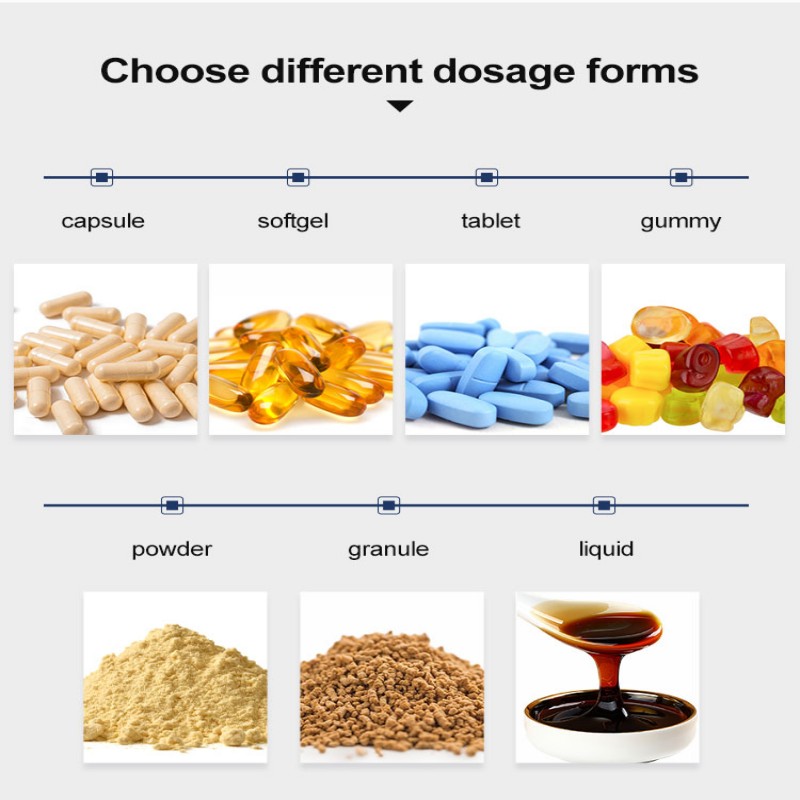
● Strategic Intent: Supplement format selection is a multi-dimensional decision that impacts brand perception, supply chain logistics, and consumer experience.
● Capsules for Efficiency: They are the industry standard for rapid speed to market and are ideal for complex functional stacks where flavor is not a priority.
● Tablets for Differentiation: This format offers precise dosing, long shelf life, and strong market differentiation through chewable or effervescent options.
● Powders for Habit Formation: Powders excel when high dosages are required and create strong daily rituals through customized flavor profiles.
● Softgels for Lipids: They are the golden standard for fat-soluble ingredients, providing hermetic sealing for freshness and a premium consumer feel.
● Manufacturing Feasibility: Successful scaling requires aligning ingredient compatibility with the right format early to avoid production bottlenecks or costly reformulations.
● Consumer-Centric Choices: Brands must choose formats based on target demographics, such as avoiding pills for aging populations or children who struggle with swallowing.
Effective supplement format selection requires balancing ingredient characteristics with consumer lifestyle needs. A brand must look beyond what is easiest to manufacture and focus on what makes sense for its specific business goals.
The physical weight of your active ingredients often dictates the format. If a functional stack requires multiple grams of active material, it may exceed the capacity of a standard capsule or tablet. In these cases, a powder becomes the logical choice to avoid "pill fatigue" caused by requiring users to swallow a dozen capsules per serving.
Different formats offer varied release speeds. Powders often provide the most rapid absorption because they are pre-dissolved in liquid. Conversely, tablets and capsules must undergo disintegration in the digestive tract, which can be strategically used for timed-release formulations.
Sensitive actives, such as probiotics or certain botanical extracts, require protection from environmental factors like light and oxygen. Capsules and softgels excel here by providing a protective shell that simplifies stability for sensitive ingredients. Tablets offer high stability through compression but may require specialized coatings to protect the actives from humidity.
Capsules are often the right choice when flavor is not central to the brand experience, as they protect the user from bitter or unpleasant-tasting ingredients. However, if your brand identity relies on a "delicious ritual"—common in sports nutrition or collagen products—you must confront flavor science directly through powders or chewable tablets.
Your audience's physical capabilities and preferences are paramount. Capsules and large tablets are often less ideal for children, aging populations, or anyone who dislikes swallowing pills. For these groups, powders or flavored chewable formats significantly improve daily compliance and reorder rates.
If a rapid launch is the priority, capsules are typically the fastest route to market because they require less complex flavor systems or sweeteners. Developing a high-quality flavored powder or a stable compressed tablet often involves more intensive R&D and pilot batching.
Tablets are frequently the most cost-efficient option for high-volume, standardized products. While they may involve higher upfront development costs for compression engineering, the per-unit savings at scale often outweigh the initial investment compared to capsules.
Feature | Capsules | Tablets | Powders | Softgels* |
Speed to Market | High | Medium | Medium | Low |
Flavor Importance | Low | High | Critical | Low |
Dosage Capacity | Low | Medium | High | Medium |
Stability | High | Very High | Medium | High |
Capsules remain the most widely used format in the industry for a reason. They are efficient to produce, familiar to the average consumer, and highly versatile across nearly every ingredient category.
They are commercially safe and operationally efficient. Capsules allow brands to launch functional stacks quickly because they don't require the complex binders needed for tablets or the intense flavoring required for powders. They provide a clean, professional appearance that consumers trust.
Capsules can accommodate a broad range of ingredients, including blends that might be difficult to compress into a stable tablet form. This makes them ideal for nootropics, hormone support, and multi-active adaptogens where the ingredient interactions might otherwise complicate production.
Brands can easily navigate dietary preferences by choosing between traditional gelatin or plant-based (HPMC) shells. This flexibility allows for better label transparency and appeals to the growing vegan and vegetarian market segments.
The production process for capsules is relatively straightforward, which simplifies the supply chain. They allow for flexible dosing across different SKUs without requiring a complete overhaul of the manufacturing line.
Tablets are gaining significant momentum in 2026, particularly in sports nutrition, beauty, and hydration categories. They appeal to brands that prioritize precise dosing and a durable, travel-friendly product.
Tablets are created by compressing powdered ingredients into a solid, compact form. This results in a durable product with an excellent shelf life that does not require refrigeration. They are ideal for high-volume distribution where product integrity during shipping is a concern.
Modern tablet technology allows brands to move beyond the traditional "swallow" pill. Chewables, dissolvables, and effervescent formats allow brands to integrate function with a unique sensory experience. This creates a point of differentiation that is often more memorable than a standard capsule.
Because tablets are dense and compact, they allow for reduced packaging volume. This not only lowers shipping costs for DTC brands but also improves shelf appeal in retail environments where space is at a premium.
The main challenge with tablets is flavor and mouthfeel. Unlike capsules, tablets force brands to confront bitterness masking and aftertaste directly. Many concepts fail during scale-up because a flavor that works in a small batch may not survive the heat and pressure of high-speed compression.
While not always the easiest to manufacture, softgels are the preferred format for liquid or oil-based ingredients. They provide a level of protection and consumer perception that other formats struggle to match.
Oils and fat-soluble vitamins (like Vitamin D, E, and Omega-3s) are often most bioavailable when delivered in a liquid-filled shell. This bypasses the need for the body to first dissolve a dry powder, potentially leading to faster and more complete absorption.
Softgels provide a completely airtight seal, which is critical for preventing the oxidation of oils. This hermetic seal ensures that the product remains fresh and potent throughout its shelf life, protecting the sensitive actives from light and air exposure.
There is a psychological component to supplement format selection. Consumers often perceive softgels as a higher-quality, "premium" product compared to traditional tablets or capsules. The smooth texture makes them easier to swallow, which can lead to higher customer satisfaction and reorder rates.
Powders continue to dominate functional beverage categories like protein, pre-workout, and gut health. This format is high-impact and puts the consumer in control of their daily routine.
Powders are the only viable solution when dosage requirements exceed the limits of pills. If a product requires 5–10 grams of collagen or fiber, a powder allows the user to consume the full dose in one serving rather than multiple capsules.
In this format, flavor is core to the product identity. When solubility, sweetness balance, and mouthfeel are engineered correctly, the supplement becomes a daily habit that consumers look forward to. This drives strong brand loyalty and repeat purchases.
Powder formats are technically demanding. They are highly sensitive to humidity, which can lead to clumping and stability issues. Manufacturers must use precise blending and moisture control to ensure the product remains free-flowing and dissolves easily in water.
Powders allow consumers to measure servings according to their preferences or mix them into various beverages. This flexibility is highly valued in the 2026 market, where personalization is a key driver of consumer choice.
A successful product launch depends on choosing a format that can actually be manufactured at scale without constant quality issues.
Not all ingredients behave well in every format. Some may be too hygroscopic (moisture-absorbing) for capsules, while others may be too bulky for compression into tablets. A custom manufacturer can assess these properties early to recommend the most feasible delivery system.
Choosing the wrong format early can create major bottlenecks as you grow. Transitioning from a small-batch powder to a high-speed tablet line, for example, requires careful planning to ensure the active density remains consistent. Choosing a format with a clear path to scale protects your momentum.
Working with a partner that has capabilities across capsules, tablets, and powders is a significant advantage. It allows your brand to add new formats or extend product lines without needing to rebuild your entire supply chain.
Your supplement format selection must align with where and how your product is sold.
Direct-to-consumer (DTC) brands often prefer lightweight formats like tablets or capsules to minimize shipping costs. Retailers, on the other hand, may prioritize powders or large-format packaging that provides more "shelf presence" and visual impact.
Formats that are easy to incorporate into a daily routine—like a morning powder drink or a convenient tablet—naturally lead to higher reorder rates. If a format is cumbersome or unpleasant, customers are less likely to finish the bottle and even less likely to buy a second one.
In a market saturated with capsules, launching a flavored powder or a high-tech chewable tablet can provide the edge needed to stand out. Brands that scale successfully often expand across multiple formats as their market evolves to capture different consumer segments.
Successful supplement format selection requires aligning your product with long-term business goals and consumer lifestyles. While capsules provide efficiency, tablets offer precision and powders drive daily habits. By partnering with jiahonghealth, brands gain expert R&D and manufacturing support. Their versatile services ensure your chosen format accelerates growth and delivers maximum value to your customers.
A: It shapes the consumer experience, logistics, and reorder frequency, ensuring business longevity.
A: Powders are ideal for high-impact dosing when ingredients exceed pill weight limits.
A: Tablets offer cost-efficiency at high volumes, while capsules provide faster, lower-cost initial development.
A: Select capsules for multi-ingredient stacks requiring efficient production and rapid speed to market.


