

Views: 0 Author: Site Editor Publish Time: 2026-03-10 Origin: Site


Private label success often starts with the right supplier, not the lowest quote. Choosing a reliable CoQ10 supplement manufacturer means comparing quality, absorption technology, certifications, and customization support. In this article, you will explore five notable companies and learn which manufacturers best match different sourcing goals in the CoQ10 market.
Choosing a CoQ10 supplier is not only about price. For most buyers, the better question is whether the manufacturer can deliver the right ingredient form, dependable absorption support, and documentation strong enough for retail, private label, or cross-border sales. These factors shape both product quality and how the final formula is positioned in the market.
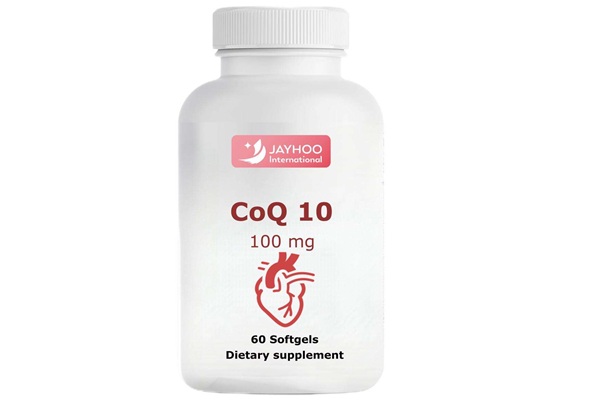
When comparing manufacturers, buyers should first look at whether the supplier works with ubiquinone, ubiquinol, or both. Ubiquinol is often positioned as the more bioavailable form, while ubiquinone remains widely used in mainstream formulations and is often easier to price competitively. Delivery format matters as well, because CoQ10 is fat-soluble and formulation choices can influence perceived value and user appeal.
Evaluation point | Why it matters to buyers |
Ubiquinone vs. ubiquinol | Affects positioning, cost, and target audience |
Softgels vs. capsules | Influences absorption strategy and user preference |
Enhanced-absorption design | Supports premium differentiation |
A reliable manufacturer should also show clear production credibility. Buyers typically review GMP-related compliance, FDA registration status where relevant, third-party testing, and the supplier’s ability to support OEM or private label projects. The strongest partners combine quality control with practical flexibility, making it easier to customize formulas, packaging, and launch requirements without adding unnecessary sourcing risk.
Thorne is best understood as a premium-tier CoQ10 supplement manufacturer rather than a volume-first supplier. It is known for professional-grade supplements, clean formulas, and a reputation that aligns with quality-led supplement positioning. That matters for buyers who are not simply looking for a low-cost product to fill a catalog, but for a CoQ10 line that can support higher perceived value in practitioner, wellness, or performance-focused channels.
A key reason Thorne stands out is the way it is associated with controlled manufacturing standards and a stricter quality image than many mainstream supplement brands. Its cGMP-compliant production and NSF-linked quality positioning reinforce a message of process reliability, ingredient discipline, and product trust. Its CoQ10 offering also supports a cleaner-label image, with attention to natural sourcing and the avoidance of unnecessary artificial additives.
Buyer consideration | What Thorne signals |
Manufacturing quality | cGMP-compliant production environment |
Brand positioning | Professional-grade, premium supplement image |
Formula perception | Clean-label orientation with fewer unwanted additives |
Market appeal | Better suited to trust-driven and quality-sensitive segments |
For sourcing purposes, Thorne makes the most sense for buyers building premium supplement lines rather than competing in low-price, mass-market distribution. Its profile fits brands that want a CoQ10 product associated with consistency, stronger quality reassurance, and a more refined market position. This can be especially relevant in channels where buyers care about brand trust and manufacturing standards as much as ingredient strength.
A practical way to view Thorne is through buyer priorities:
● Higher perceived product credibility
● Better alignment with premium wellness positioning
● Stronger appeal in practitioner-oriented or quality-sensitive markets
That combination makes Thorne more attractive for businesses that want premium positioning to be part of the product story, not just the label design.
For buyers that need a manufacturing partner rather than just a finished-product brand, Jiahong Health Technology Group Co., Ltd. deserves serious attention. The company is a specialized manufacturer focused on natural nutritional supplements, with 16 years of experience spanning research and development, production, and sales. That combination is important in OEM and private label projects, where buyers often need more than factory output. They also need formulation understanding, packaging coordination, and production systems that can support repeated orders across different markets.
A major reason Jiahong stands out is its manufacturing profile. Its factory is registered with the US FDA and holds a broad set of certifications, including GMP, BRC, HACCP, ISO, and Organic. For B2B buyers, those credentials strengthen confidence in production control, documentation readiness, and suitability for export-oriented projects. They also make the company easier to position for customers who expect compliance-focused sourcing, especially in categories tied to heart health, energy support, and daily wellness.
Capability area | What Jiahong offers |
Industry experience | 16 years in supplement R&D, production, and sales |
Facility credibility | US FDA-registered factory |
Certifications | GMP, BRC, HACCP, ISO, Organic |
CoQ10 formats | Capsules and softgels |
Business model | OEM, ODM, private label, wholesale |
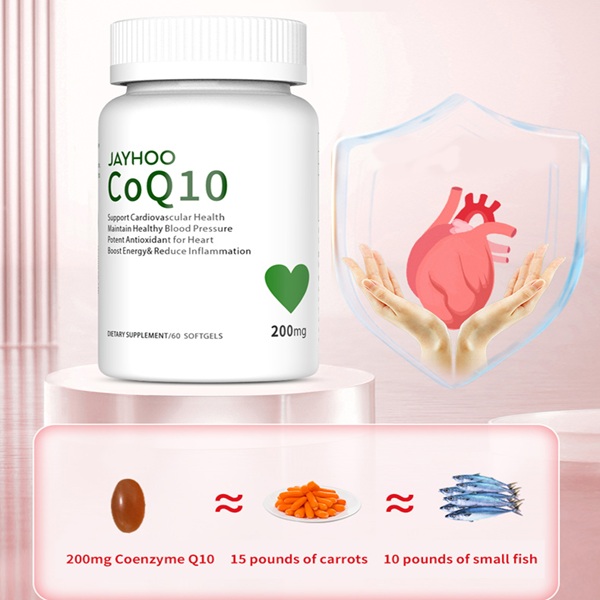
Jiahong’s CoQ10 offering is notable because it covers more than one product direction. Its portfolio includes a triple-absorption capsule built around both water-soluble and fat-soluble delivery concepts, as well as a higher-strength 200 mg softgel aimed at heart health support. This gives buyers a wider strategic range. One product can be positioned around advanced absorption and daily wellness, while another can target stronger potency, cellular energy, and more premium heart-health messaging. That flexibility is useful for brands trying to build a product ladder instead of relying on a single generic SKU.
Its customization strength is equally important. Jiahong supports OEM and ODM projects with options covering dosage, format, packaging, labeling, and branding, which makes it practical for both established supplement companies and newer private label entrants. The company also emphasizes strict internal testing, third-party inspection, and multi-department quality checks, suggesting that customization is supported by a structured quality-control process rather than treated as a simple packaging service. Operationally, its profile fits businesses selling through wholesale channels, cross-border e-commerce, and branded international supplement programs, especially when fast delivery and adaptable production support are part of the sourcing requirement.
NOW Foods is consistently positioned as a value-driven player in the CoQ10 category, making it relevant for buyers who want a dependable product without moving into premium-price territory. It is associated with affordability, broad consumer accessibility, and practical everyday supplement use rather than niche or practitioner-led positioning. That makes it especially attractive in markets where purchase decisions are shaped by price sensitivity, familiar branding, and straightforward wellness benefits.
One of the main strengths of NOW Foods is that it balances cost control with a credible quality image. It is widely regarded as a budget-friendly choice while also offering safety-related verification and formulas designed to avoid several common allergens. For many buyers, that combination matters more than advanced delivery technology, because it supports wider audience reach without making the product look overly basic. In mass-market supplement categories, accessibility and label friendliness can be just as important as technical differentiation.
Value factor | What it signals for buyers |
Competitive pricing | Easier entry into price-sensitive segments |
Broad accessibility | Suitable for mainstream supplement demand |
Safety-related verification | Adds confidence without premium cost inflation |
Allergen-conscious formulation | Improves appeal for wider consumer groups |
NOW Foods is best suited to buyers targeting large retail audiences, general wellness users, and product lines that compete in accessible pricing bands. Rather than serving as a highly specialized CoQ10 supplement manufacturer, it fits businesses that prioritize turnover, shelf reach, and market familiarity. This is the kind of supplier profile that works well when the goal is to serve broad demand across online retail, chain distribution, and entry-level wellness catalogs.
For buyers building around value, NOW Foods supports three commercial advantages:
● Easier positioning for everyday heart health and wellness
● Better fit for competitive retail price points
● Stronger alignment with mass-market volume strategies
That makes it a practical option for businesses focused on scale and accessibility instead of premium niche segmentation.
Life Extension occupies a more specialized position in the CoQ10 market than broad, price-driven competitors. It is closely tied to ubiquinol-focused products, which already places it in a more advanced segment of the category. That matters for buyers because ubiquinol is often used to support a stronger premium narrative around absorption, formulation sophistication, and targeted wellness benefits. Rather than competing on entry-level accessibility, Life Extension is associated with more refined CoQ10 positioning and higher-value product architecture.
A major reason Life Extension stands out is the way its CoQ10 line is framed around advanced formulation rather than simple category presence. Its ubiquinol orientation and formulas linked with mitochondrial support suggest a product strategy designed to go beyond basic heart-health messaging. This makes the company especially relevant in segments where buyers want a more technical or elevated formula story. Healthy aging, cellular energy, and premium wellness are all stronger commercial fits for this kind of manufacturer than mass-market supplementation.
Positioning factor | What it suggests for buyers |
Ubiquinol focus | Higher-end CoQ10 formulation strategy |
Advanced product profile | Better differentiation from entry-level formulas |
Mitochondrial support angle | Stronger fit for premium wellness messaging |
Healthy-aging relevance | Useful for age-targeted product segmentation |
Life Extension is most relevant for brands that do not want a basic CoQ10 product competing mainly on price. Instead, it suits buyers developing premium SKUs in heart health, energy support, or healthy aging categories where stronger formulation identity can justify a higher-value offer. For this type of brand, a specialized CoQ10 supplement manufacturer can do more than supply ingredients. It can help shape a more distinctive market position.
Three buyer scenarios make Life Extension especially useful:
● Premium heart-health products with stronger formulation positioning
● Energy-support SKUs aimed at higher-value wellness customers
● Healthy-aging lines that need more advanced product framing
That makes it a practical choice for companies looking to build a differentiated CoQ10 range instead of a standard commodity-style supplement.
Kaneka plays a different role from most names discussed in the CoQ10 market. Instead of being positioned mainly as a consumer-facing supplement brand, it is known as a major producer of CoQ10 ingredients, especially ubiquinol. That distinction matters because many finished supplements are judged not only by branding, dosage, or packaging, but also by the credibility of the ingredient supplier behind the label. In categories where buyers care about formulation quality, the upstream source can influence how the final product is perceived across retail, practitioner, and premium wellness channels.
What makes Kaneka important is its place near the beginning of the value chain. While many companies focus on selling finished softgels, capsules, or branded wellness products, Kaneka is associated with the ingredient foundation itself. In practical terms, that gives it influence far beyond a single product line. When an ingredient producer has a strong reputation for manufacturing quality, research investment, and consistent supply, that reputation often carries downstream into the finished supplement.
Supply-chain factor | Why it matters in finished CoQ10 products |
Ingredient producer role | Shapes the quality base before final formulation begins |
Ubiquinol expertise | Supports premium positioning around advanced CoQ10 forms |
Manufacturing credibility | Helps strengthen trust in brand claims and product quality |
Consistent raw material supply | Reduces risk of variation across production batches |
This is especially relevant in CoQ10 because ingredient form already affects product positioning. A manufacturer using a recognized ubiquinol source may be able to support stronger premium messaging than one relying on a less visible supply base. For many buyers, that does not replace the need to evaluate the finished-product manufacturer, but it does improve the overall credibility of the formula story.
Kaneka is most relevant for buyers who understand that evaluating a CoQ10 supplement manufacturer should include more than the final factory. The source of the active ingredient can affect consistency, technical confidence, and how easily a product can be positioned in the premium part of the market. This becomes even more important when brands want to justify higher pricing or communicate a more advanced formulation standard.
For buyers focused on ingredient strength, Kaneka supports three practical priorities:
● Stronger confidence in the raw material behind the finished formula
● Better alignment with premium ubiquinol positioning
● More persuasive quality storytelling for high-trust sales channels
That makes it particularly useful for companies building premium CoQ10 products where ingredient origin is part of the value proposition, not just a hidden supply detail.
A: A CoQ10 supplement manufacturer should be checked for ingredient form, certifications, testing, and OEM capability.
A: A CoQ10 supplement manufacturer should show GMP compliance, FDA-related registration where relevant, and third-party quality testing.
A: The right CoQ10 supplement manufacturer should explain whether ubiquinol or ubiquinone fits your cost and positioning goals.
A: A CoQ10 supplement manufacturer with strong raw material sourcing usually offers better consistency, traceability, and batch reliability.


